I built this for fun in late 2022.
The rest of this post is a compilation of random posts from social media.
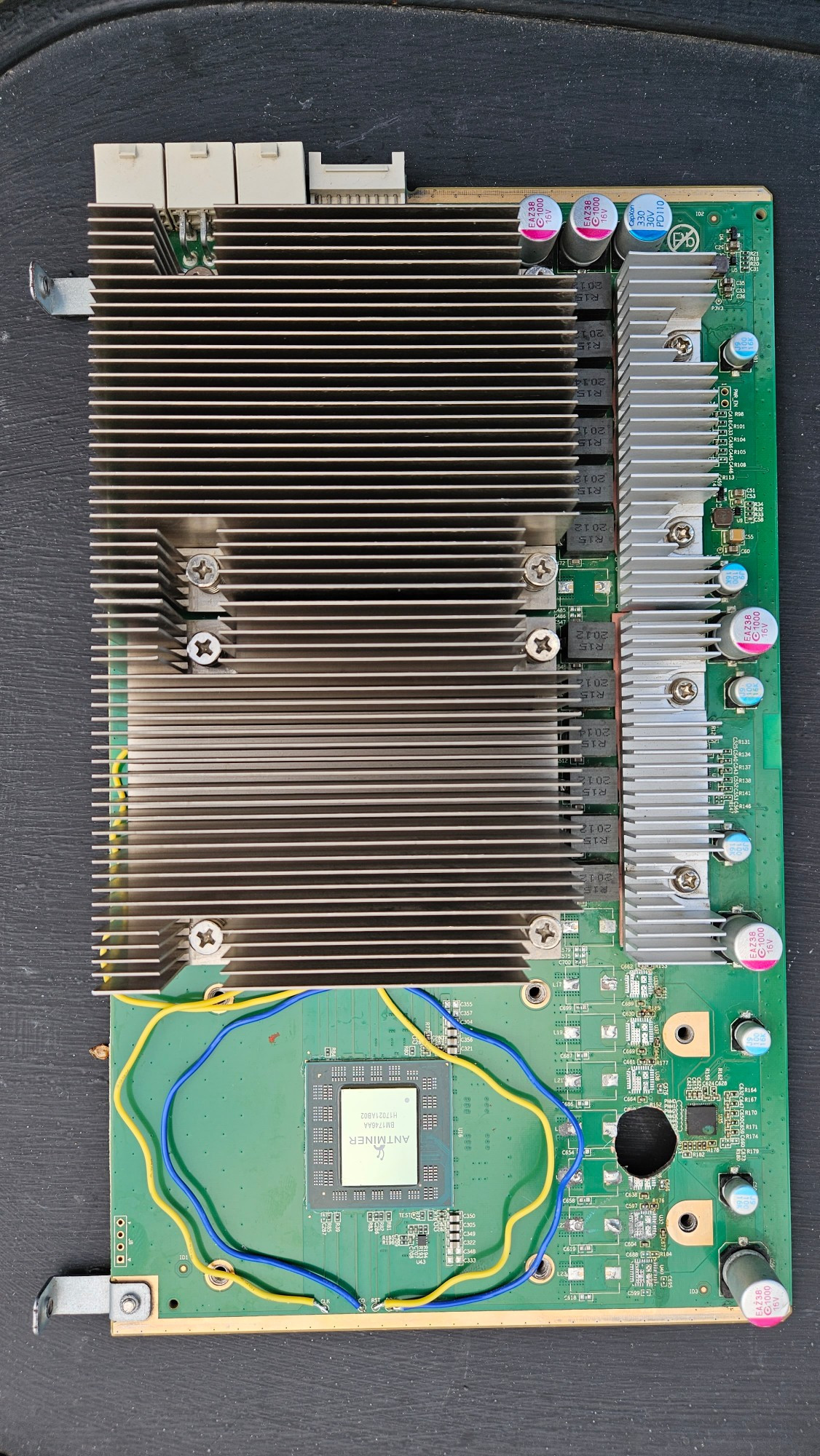
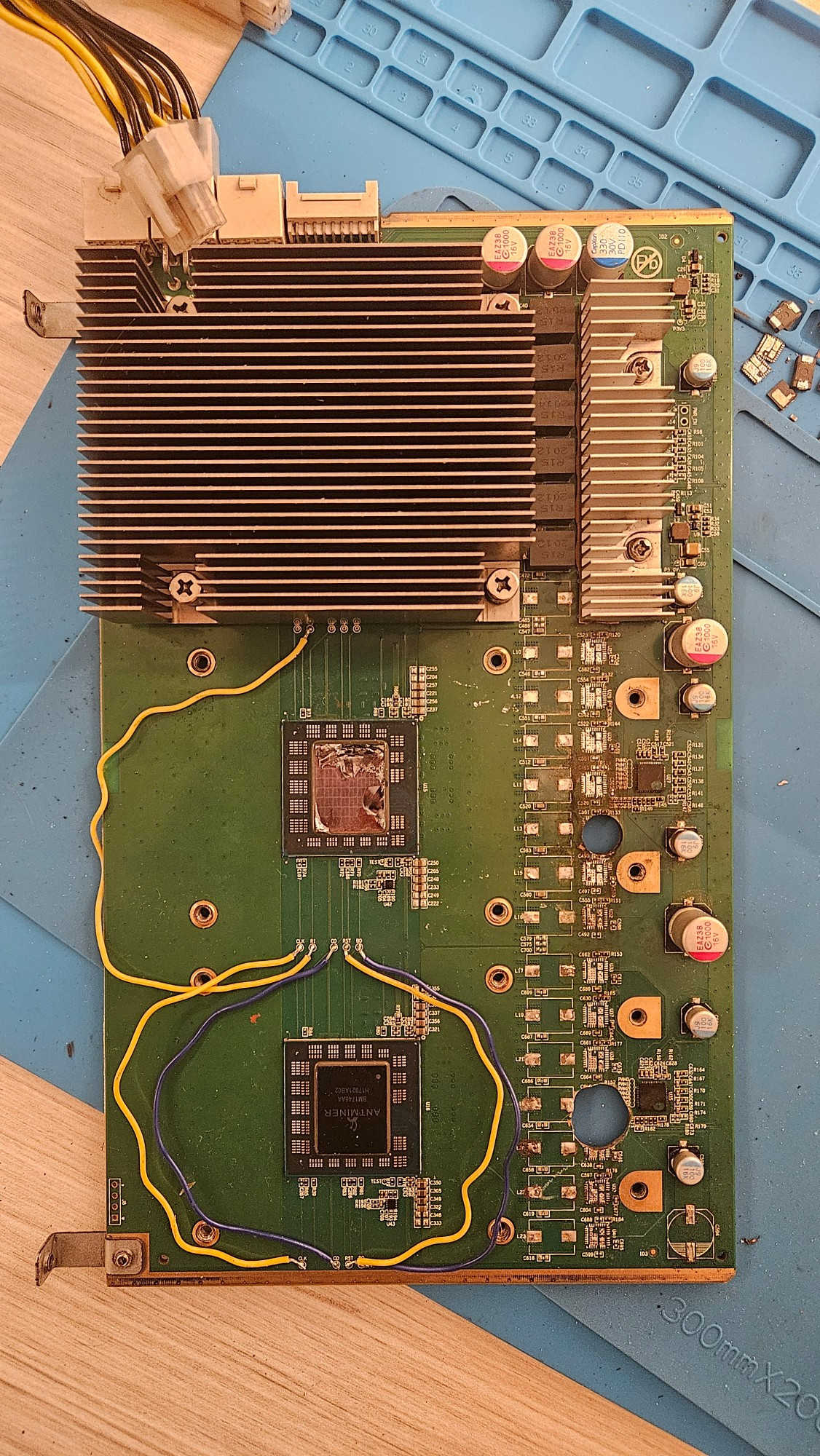
There are three hashboards in each machine, and below is what the hashboard looks like. The hole in the PCB is due to a previous failure in the power circuitry, as I mentioned in the video.
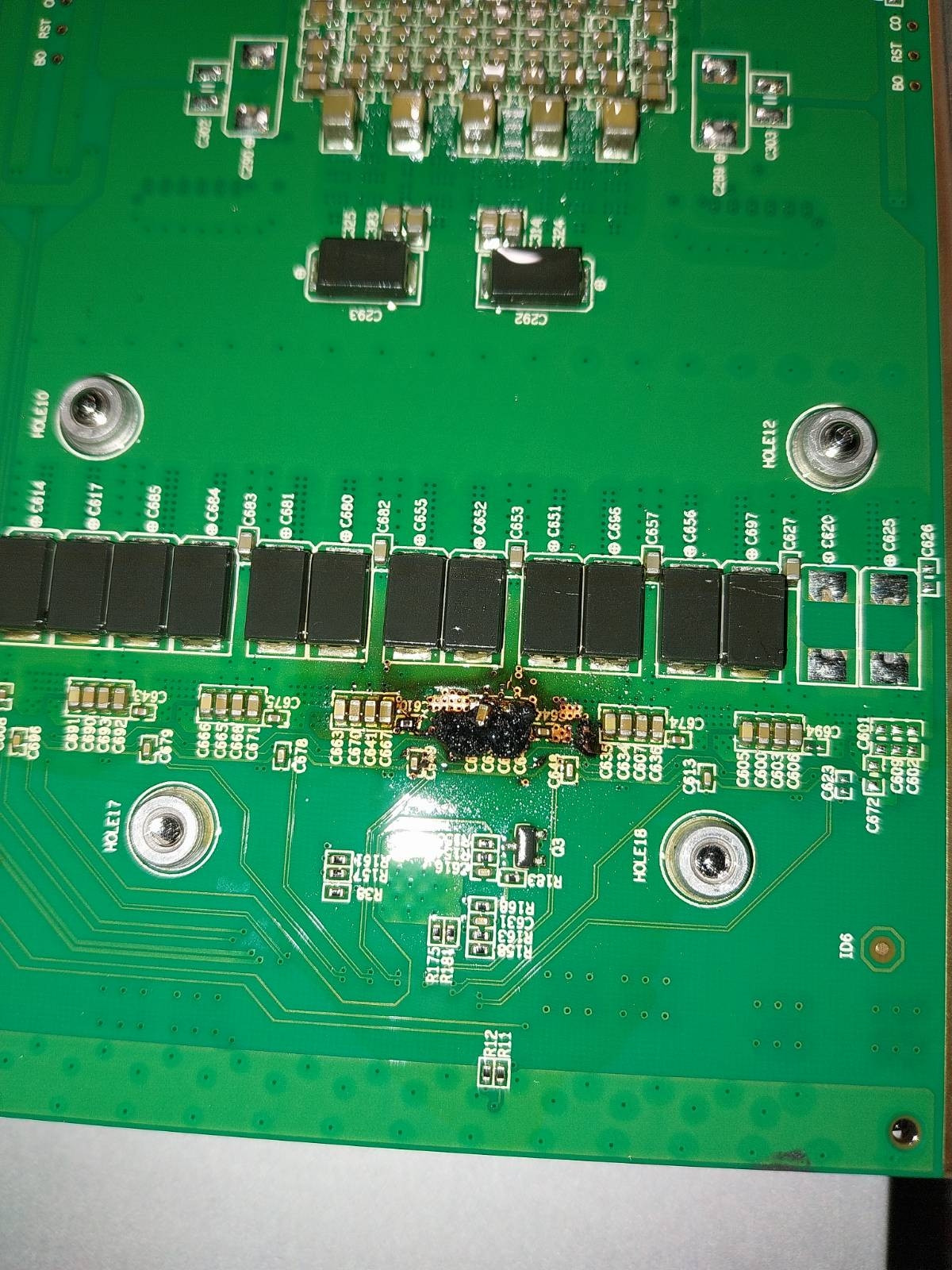
The same failure happened again on the same board. This is what it looked like on the other side of the board.
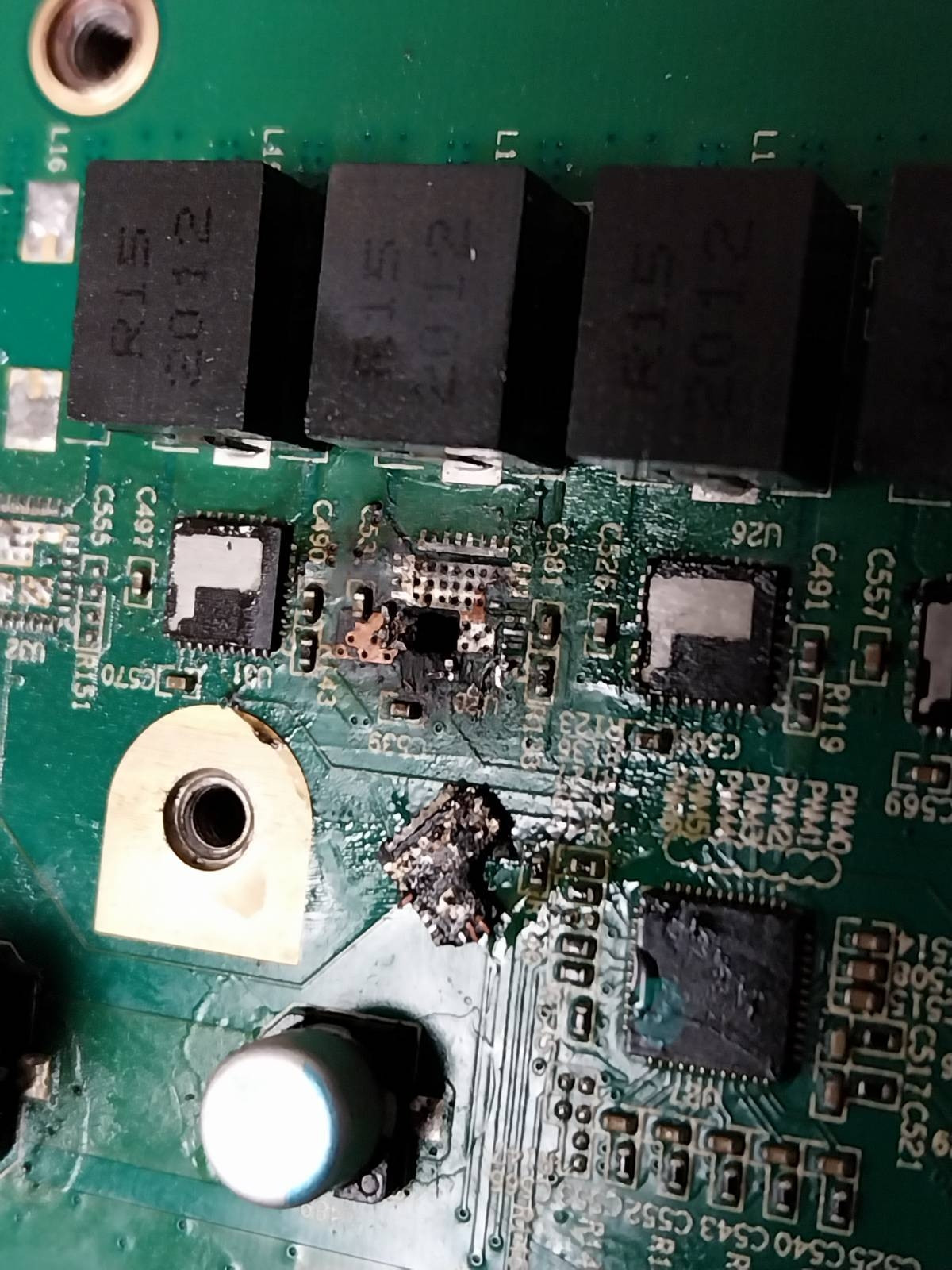
And this is what it looked like under the heatsink.
Below is the same board with one more hole and the affected ASIC peeled off. I removed the SMDs related to the affected ASIC and drilled out the burned part to get rid of the short circuit. The ASIC came off with the heatsink. When I was fixing the board the other day, I had resorted to thermal epoxy glue instead of thermal paste because every thermal paste I tried dissolved in the oil.
However, the short circuit was still there, so it was time to take out my new thermal camera. I connected the board to a regulated power supply, set the voltage to 12V, and limited the current to 10A. Here’s what I got.
After more drilling, the short circuit still wouldn’t go away, so I took another video. By the way, drilling a PCB is no fun. Instead of drilling, I was essentially burning the material away and subsequently inhaling it. The PCB seemed to have four layers.
After some more drilling and cleaning, the short circuit disappeared. I connected some signal paths on the PCB by making a mix of educated and completely random guesses, and I used the thermal camera again to check that at least the last ASIC still worked. And it did!
Software-wise, the machines are a disaster unless we pretend that the GPL
doesn’t exist. The machines only expose a router-like web interface, and no SSH
access, but the control board in the machine exposes physical UART pads, and if
you have a USB-to-TTL UART adapter lying around, you can get direct access to
the serial console. A good old Flipper Zero will do. The login and password were
both root IIRC. Once you’re in, you’ll see Ångström Linux with BusyBox and a ton
of other GPL-licensed software, including the mining client itself, which is
cgminer. There’s also Dropbear available, which is an SSH server. You can enable
it and get SSH access to the machine, which is nice. What is not nice is that it
stops working once you reboot the machine. The reason is that the rootfs is
loaded into RAM from a NAND flash during each boot, so no file changes persist.
The sequence looks like this:
- U-Boot loads the compressed
ext4filesystem image from NAND into RAM. - The kernel decompresses it into a ramdisk block device.
- It mounts that ramdisk as
ext4at/. - The system runs entirely from this ramdisk.
I didn’t find a way around this. I tried unpacking, modifying and repacking the
filesystem with ofrak, which is an amazing tool, but repacking ext4 didn’t work
well at that time. I also played with the amazing Glasgow Interface Explorer,
but didn’t have the time to do anything meaningful yet. So no persistent SSH
access yet.
By the way, below is how I started in 2017. There are six water-cooled Nvidia 1080 Ti graphics cards at the bottom of the bench-turned-into-a-rack. They were upside down in case of a leak. The glass on the right was catching one. The GPUs were mining ZEC until ASICs took over, then ETH.
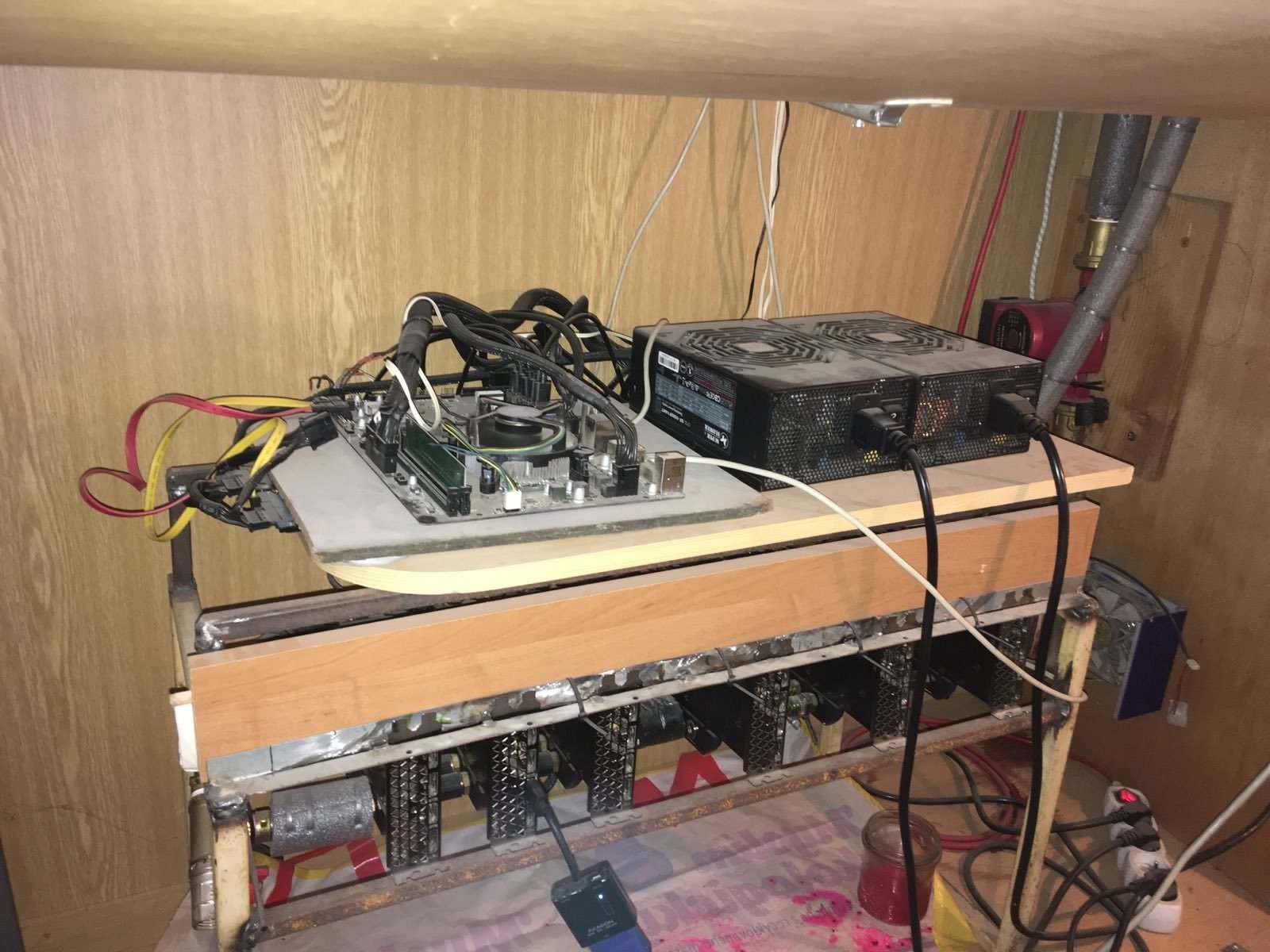
I was using distilled water, but nevertheless, it quickly came alive. I solved it by adding some engine coolant fluid I found. Nothing worked initially, but in the end, the GPUs were mining until ETH switched to PoS. Right above the GPUs was a little control room — or at least a cabinet, pictured below. The two buttons on the bottom left were the UI for my family. The transparent food container beside the UI was a case for a transformer with live AC, powering the blue relays sitting on top.
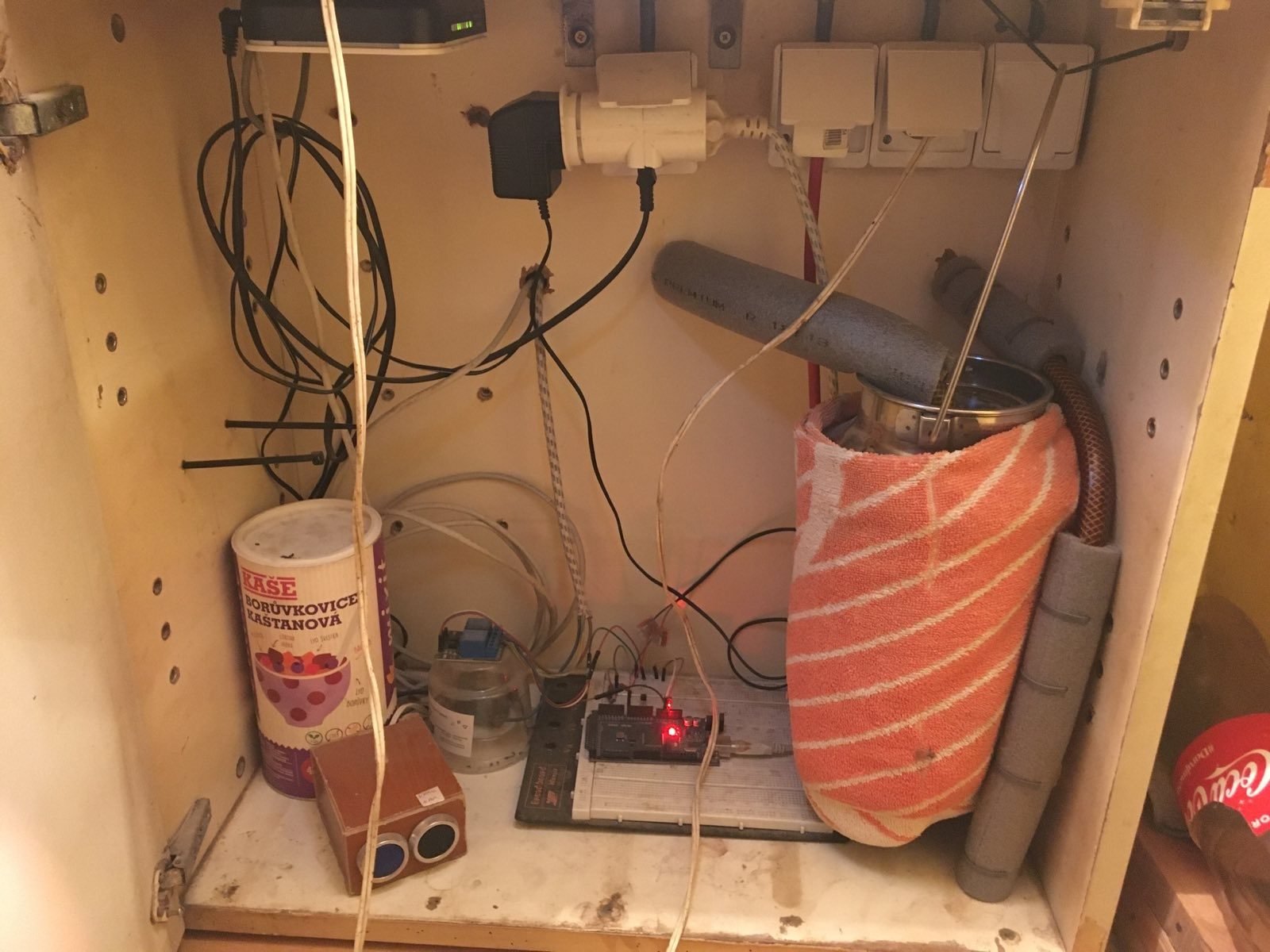
The tank wrapped in a towel was an expansion tank for the cooling system. The Arduino in the middle talked to the computer and controlled a “cooling backend” via the relays. Below was the backend. The insulated garden hoses from the previous photos, acting as pipes, were connected to the white boiler, which served as a heat exchanger. The heat from the GPUs was being routed to the house’s heating system.
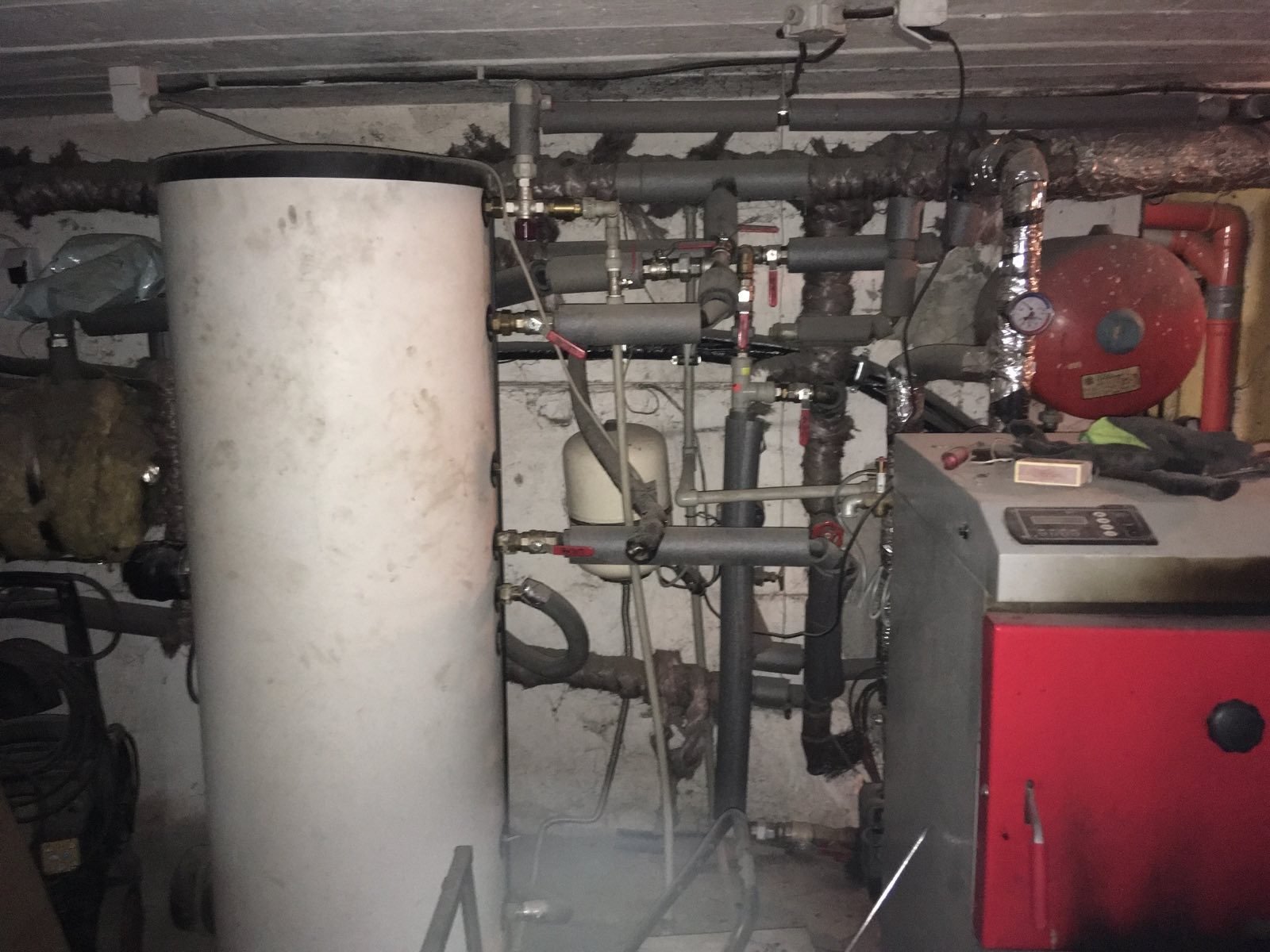
Making the systems talk to each other was fun, as you can tell from the plumbing. I needed to teach the legacy system new tricks, and long story short, it fucking worked! The GPUs were helping with heating at all times, and they were happy when the furnace was at full blast. Most of this is gone, though. The ASICs from the video replaced the GPUs and the furnace. All the plumbing is gone. Only the boiler and the electric heater didn’t move. Deprecation in Zcash runs deep.
By the way, the new mining setup has a positive effect on CO2 emissions. Unlike the furnace, the machines have essentially zero emissions. The latest proper data I have on energy source distribution is for 2023. In that year, the ASICs consumed 32MWh. The solar system directly offset 1/3 of that and pushed three additional MWh to the grid. The graph below describes the production of the solar system for each month of that year.
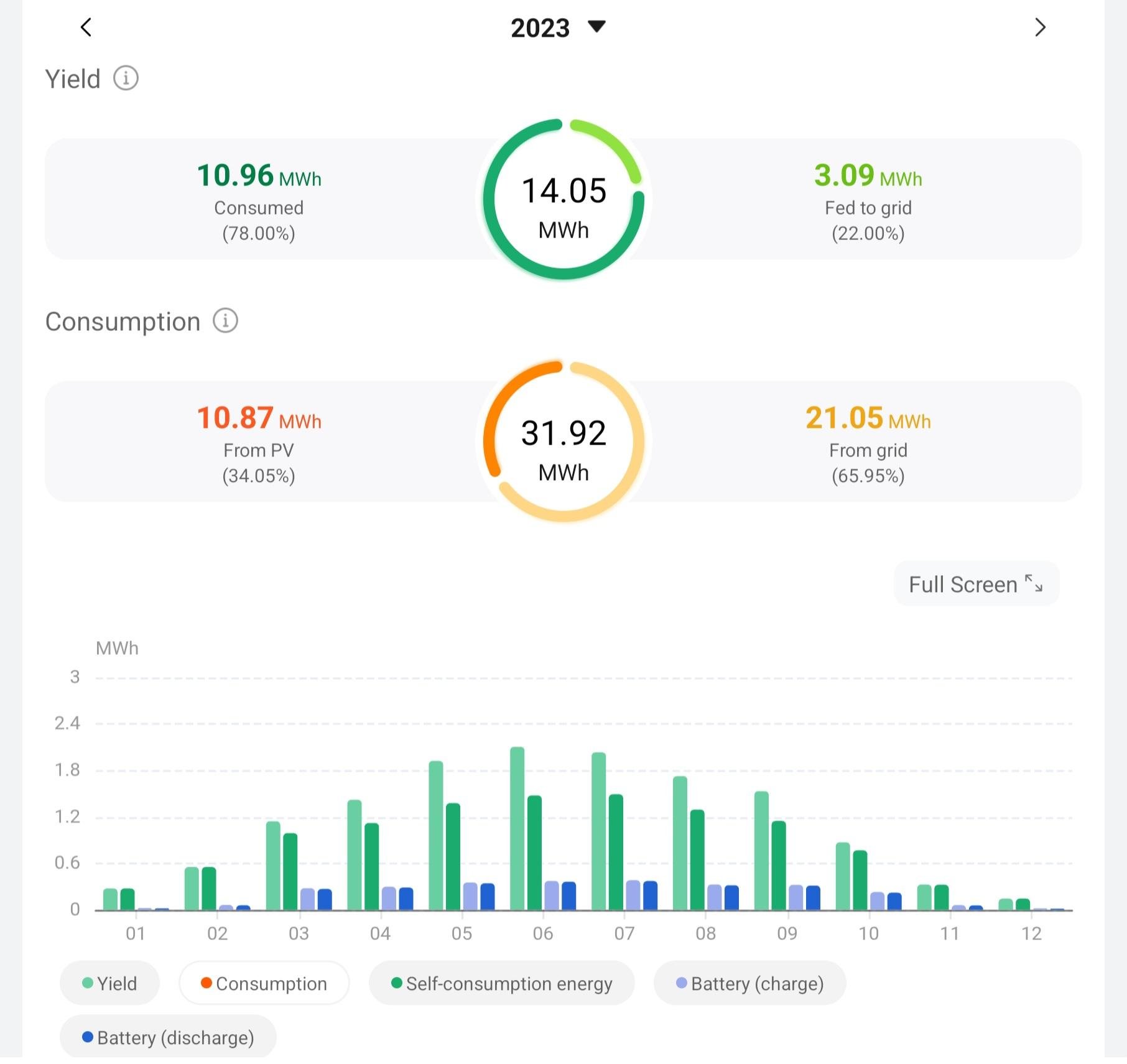
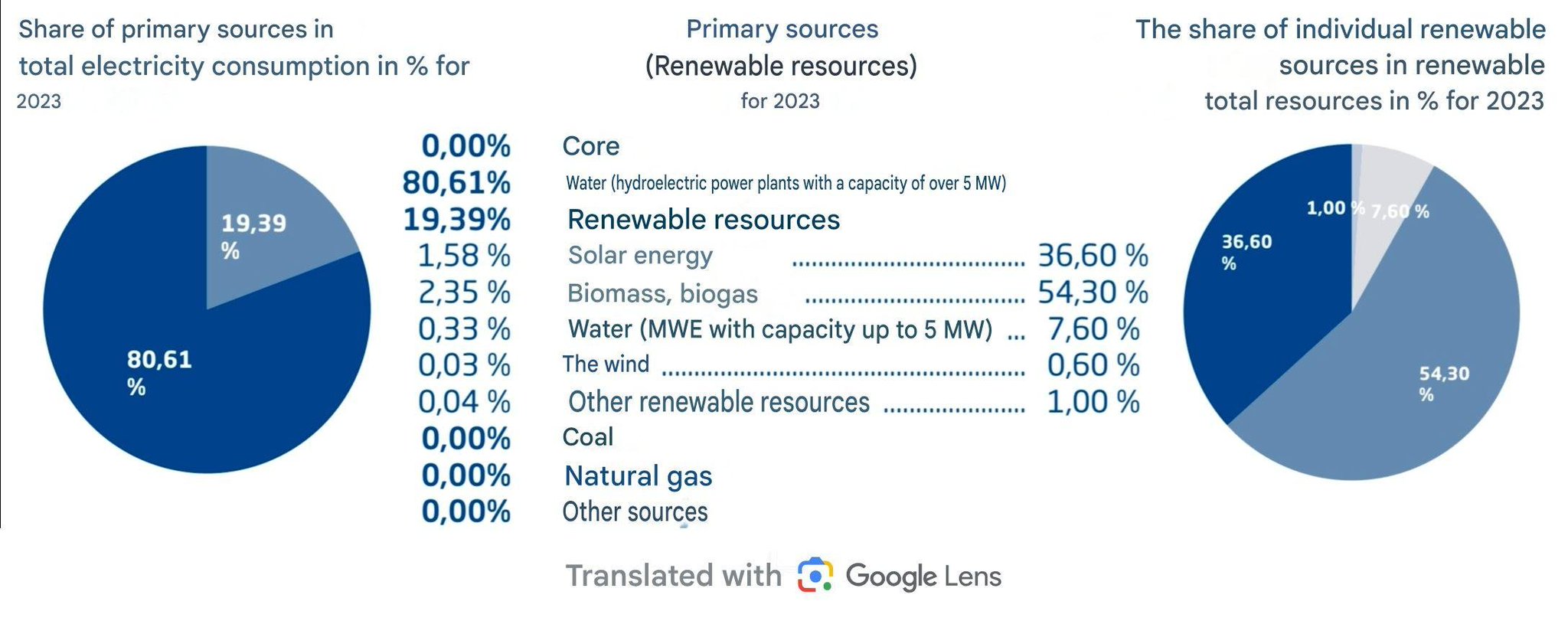
The remaining 20 MWh were sourced like this. The house doesn’t use any other heating.